
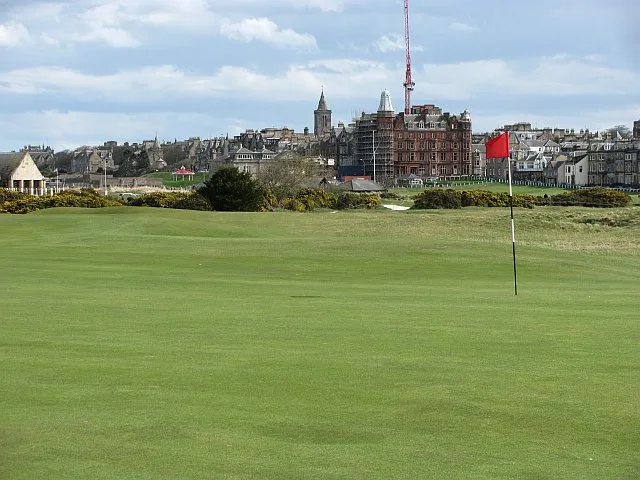

The story and its setting
An Open record needs a clear definition. The lowest individual round is not the lowest winning aggregate; the best score against par is not necessarily the fewest strokes; and an early championship played over thirty-six holes cannot be treated as if it had the modern format. These distinctions make the numbers more useful. They explain what a player achieved without asking one statistic to describe every aspect of a performance.
This selection covers completed championships through Royal Birkdale in 2026, following The R&A’s current records and individual edition archives. It includes the four rounds of 62 now recorded at The Open, rather than stopping with the first in 2017. The complete champions list provides every result, while the venue record connects the figures with all fourteen host courses.
The most Open victories
Harry Vardon won six Opens, in 1896, 1898, 1899, 1903, 1911 and 1914. Four players have reached five: James Braid, J.H. Taylor, Peter Thomson and Tom Watson. The table includes everyone with at least five titles. It is a list of victories in this championship, not a ranking by all majors, tour wins or Ryder Cup points.
| Player | Wins | Winning years | Source |
|---|---|---|---|
| Harry Vardon | 6 | 1896, 1898, 1899, 1903, 1911, 1914 | Official record |
| J.H. Taylor | 5 | 1894, 1895, 1900, 1909, 1913 | Official record |
| James Braid | 5 | 1901, 1905, 1906, 1908, 1910 | Official record |
| Peter Thomson | 5 | 1954, 1955, 1956, 1958, 1965 | Official record |
| Tom Watson | 5 | 1975, 1977, 1980, 1982, 1983 | Official record |
The dates reveal different patterns beneath similar totals. Thomson won three successive editions from 1954 to 1956, then added titles in 1958 and 1965. Watson’s five came within nine editions, from 1975 to 1983. Taylor’s first and last victories were nineteen years apart. Those are different kinds of sustained success. A total establishes membership of the same group; it does not make the careers identical.
The Great Triumvirate history follows Vardon, Braid and Taylor together. The Watson account follows five winning courses. Their place in a records table becomes more interesting when the venues and competitive circumstances are restored to it.
The lowest round: four 62s
Branden Grace became the first player to shoot 62 in The Open when he did so in the third round at Royal Birkdale in 2017. At the same course in 2026, Lucas Herbert and Sam Burns matched it in the second round, then Ryan Fox added another 62 in round three. These are four separate performances sharing the championship’s low-round record. A list naming Grace alone is therefore no longer current.
| Year | Player | Course | Round | Strokes | Source |
|---|---|---|---|---|---|
| 2017 | Branden Grace | Royal Birkdale | 3 | 62 | Official record |
| 2026 | Lucas Herbert | Royal Birkdale | 2 | 62 | Official record |
| 2026 | Sam Burns | Royal Birkdale | 2 | 62 | Official record |
| 2026 | Ryan Fox | Royal Birkdale | 3 | 62 | Official record |
All four occurred at Birkdale, but that coincidence does not establish that the course always plays easier than other Open venues. The figures belong to their rounds, course set-ups and conditions. They also do not identify the winner automatically: Grace’s record round was part of a championship won by Jordan Spieth, whereas Fox went on to win in 2026. One exceptional day and the best aggregate over the full event are separate achievements.
The contemporary official second-round report records Herbert and Burns; the organiser’s updated statistics and the Reuters third-round report confirm Fox. This record concerns rounds in The Open. It should not be presented as a list of every low round in every competition played at those courses.
Fewest strokes and the score against par
Henrik Stenson holds the lowest winning seventy-two-hole aggregate with 264 at Royal Troon in 2016. His rounds were 68, 65, 68 and 63. The final 63 also remains the lowest closing round by an Open champion in the organiser’s current record. Phil Mickelson finished three strokes behind with 267, showing why an extraordinary runner-up total does not necessarily win the championship.
| Year | Champion | Course | Strokes | Source |
|---|---|---|---|---|
| 2016 | Henrik Stenson | Royal Troon | 264 | Official result |
| 2021 | Collin Morikawa | Royal St George’s | 265 | Official result |
| 1993 | Greg Norman | Royal St George’s | 267 | Official result |
| 2025 | Scottie Scheffler | Royal Portrush | 267 | Official result |
| 1977 | Tom Watson | Turnberry | 268 | Official result |
| 1994 | Nick Price | Turnberry | 268 | Official result |
| 2017 | Jordan Spieth | Royal Birkdale | 268 | Official result |
| 2022 | Cameron Smith | St Andrews | 268 | Official result |
Stenson’s twenty-under-par finish shares the modern Open benchmark against par with Cameron Smith’s 268 at St Andrews in 2022. Troon’s par for the championship was 71 and the Old Course’s was 72: four rounds therefore produced different par totals. Both players finished twenty below those totals, even though Stenson used four fewer strokes. A fair explanation states which measure is being discussed instead of choosing whichever number makes a more dramatic comparison.
The table lists every winning seventy-two-hole aggregate of 268 or better through 2026. Early thirty-six-hole totals are excluded by definition. It is a deliberately bounded record, rather than an incomplete attempt to list every low score across the championship’s changing formats.
The oldest and youngest champions
The two age extremes belong to the Morris family at Prestwick. Old Tom won in 1867 at 46 years and 102 days; Young Tom won the following year at 17 years and 156 days. These are ages at an Open victory. They do not establish the oldest or youngest competitor, and they are not a statement about age records across all golf tournaments.
| Record | Champion | Year | Age | Course | Source |
|---|---|---|---|---|---|
| Oldest champion | Old Tom Morris | 1867 | 46 years, 102 days | Prestwick | Official record |
| Youngest champion | Young Tom Morris | 1868 | 17 years, 156 days | Prestwick | Official record |
Young Tom’s first title also came at his father’s expense: Old Tom finished runner-up in 1868. The juxtaposition gives the figures a particular historical force, but the records still describe different results in different years. Tom Watson’s challenge at Turnberry in 2009, aged 59, belongs to another category because Stewart Cink won the play-off. Watson’s achievement in coming close should not be converted into a winning-age record he did not set.
The largest margins
Old Tom Morris won by thirteen strokes in 1862, the largest margin in the championship record. That Open consisted of thirty-six holes, played as three circuits of Prestwick’s twelve-hole course. The largest margin in the seventy-two-hole era is eight strokes, achieved by J.H. Taylor twice, James Braid once and Tiger Woods once. Both records are valid when their formats are included.
| Year | Champion | Course | Margin | Championship length | Source |
|---|---|---|---|---|---|
| 1862 | Old Tom Morris | Prestwick | 13 strokes | 36 holes | Official result |
| 1870 | Young Tom Morris | Prestwick | 12 strokes | 36 holes | Official result |
| 1869 | Young Tom Morris | Prestwick | 11 strokes | 36 holes | Official result |
| 1900 | J.H. Taylor | St Andrews | 8 strokes | 72 holes | Official result |
| 1908 | James Braid | Prestwick | 8 strokes | 72 holes | Official result |
| 1913 | J.H. Taylor | Royal Liverpool | 8 strokes | 72 holes | Official result |
| 2000 | Tiger Woods | St Andrews | 8 strokes | 72 holes | Official result |
A margin measures the distance to the next finisher, rather than the winner’s score in isolation. Old Tom totalled 163 in both 1861 and 1862, yet the first win was by four and the second by thirteen. The opposing scores changed the size of the result. That example makes the limitation particularly clear: a bigger margin does not always mean that the champion needed fewer strokes than in an earlier victory.
Ties, play-offs and one walkover
The R&A’s records group twenty-one editions under play-offs through 2026. One requires an explanation: in 1876, Bob Martin received a walkover after Davie Strath refused to take part. Twenty extra-hole contests were actually played. Retaining the organiser’s complete category while identifying that exception is more accurate than silently describing twenty-one played deciders.
| Year | Course | Champion | Other tied players | Decider | Source |
|---|---|---|---|---|---|
| 1876 | St Andrews | Bob Martin | Davie Strath | Walkover; no play | Official result |
| 1883 | Musselburgh | Willie Fernie | Bob Ferguson | 36 holes | Official result |
| 1889 | Musselburgh | Willie Park Jnr | Andrew Kirkaldy | 36 holes | Official result |
| 1896 | Muirfield | Harry Vardon | J.H. Taylor | 36 holes | Official result |
| 1911 | Royal St George’s | Harry Vardon | Arnaud Massy | 36 holes; conceded after 34 | Official result |
| 1921 | St Andrews | Jock Hutchison | Roger Wethered | 36 holes | Official result |
| 1933 | St Andrews | Denny Shute | Craig Wood | 36 holes | Official result |
| 1949 | Royal St George’s | Bobby Locke | Harry Bradshaw | 36 holes | Official result |
| 1958 | Royal Lytham & St Annes | Peter Thomson | Dave Thomas | 36 holes | Official result |
| 1963 | Royal Lytham & St Annes | Bob Charles | Phil Rodgers | 36 holes | Official result |
| 1970 | St Andrews | Jack Nicklaus | Doug Sanders | 18 holes | Official result |
| 1975 | Carnoustie | Tom Watson | Jack Newton | 18 holes | Official result |
| 1989 | Royal Troon | Mark Calcavecchia | Wayne Grady; Greg Norman | 4 holes | Official result |
| 1995 | St Andrews | John Daly | Costantino Rocca | 4 holes | Official result |
| 1998 | Royal Birkdale | Mark O’Meara | Brian Watts | 4 holes | Official result |
| 1999 | Carnoustie | Paul Lawrie | Justin Leonard; Jean van de Velde | 4 holes | Official result |
| 2002 | Muirfield | Ernie Els | Thomas Levet; Steve Elkington; Stuart Appleby | 4 holes, then sudden death | Official result |
| 2004 | Royal Troon | Todd Hamilton | Ernie Els | 4 holes | Official result |
| 2007 | Carnoustie | Padraig Harrington | Sergio Garcia | 4 holes | Official result |
| 2009 | Turnberry | Stewart Cink | Tom Watson | 4 holes | Official result |
| 2015 | St Andrews | Zach Johnson | Louis Oosthuizen; Marc Leishman | 4 holes | Official result |
The format has changed. Earlier deciders were scheduled over thirty-six holes; Jack Nicklaus and Doug Sanders played eighteen at St Andrews in 1970, and Watson and Jack Newton did the same at Carnoustie in 1975. The 1989 championship introduced the four-hole aggregate play-off. At Muirfield in 2002, Ernie Els and Thomas Levet were still tied after that aggregate and needed sudden death. The last completed Open play-off in this record was at St Andrews in 2015, won by Zach Johnson.
A source correction is necessary for 2007. The organiser’s general records page currently names Ernie Els as Padraig Harrington’s play-off opponent, but the individual Carnoustie championship archive and contemporary result identify Sergio Garcia. This table follows the edition record. It is a reminder that even an official summary should be checked against the underlying championship when two entries disagree.
Seeing the places behind the figures
Use a record to choose a story, then follow it into the course history: Stenson at Troon, the Morris family at Prestwick, or Grace and the 2026 low rounds at Birkdale. The current Open visitor guide covers attending the championship. These statistics explain completed achievements; neither a past low score nor a famous winner predicts how a future Open will unfold.
Sources and useful official links
- Confirmed: Official record
- Confirmed: Official record
- Confirmed: official second-round report
- Confirmed: Official record
- Reported: Reuters third-round report
- Confirmed: Official result
- Confirmed: Official result
- Confirmed: Official result
- Confirmed: Official result
- Confirmed: Official result
- Confirmed: Official result
- Confirmed: Official result
- Confirmed: Official result
- Confirmed: Official record
- Confirmed: Official record
- Confirmed: Official result
- Confirmed: Official result
- Confirmed: Official result
- Confirmed: Official result
- Confirmed: Official result
- Confirmed: Official result
- Confirmed: Official result
- Confirmed: Official result
- Confirmed: Official result
- Confirmed: Official result
- Confirmed: Official result
- Confirmed: Official result
- Confirmed: Official result
- Confirmed: Official result
- Confirmed: Official result
- Confirmed: Official result
- Confirmed: Official result
- Confirmed: Official result
- Confirmed: Official result
- Confirmed: Official result
- Confirmed: Official result
- Confirmed: Official result
- Confirmed: Official result
- Confirmed: Official result
- Confirmed: Official result
- Confirmed: Official result
- Confirmed: Official result
- Confirmed: Official result
- Reported: Official and historical background
- Confirmed: Official and historical background
- Confirmed: Official and historical background
- Confirmed: Official and historical background
- Confirmed: Official and historical background
- Confirmed: Official and historical background
- Confirmed: Official and historical background
- Confirmed: Official and historical background
- Confirmed: Official and historical background
- Confirmed: Official and historical background
- Confirmed: Official and historical background
- Confirmed: Official and historical background
- Confirmed: Official and historical background
- Confirmed: Official and historical background
- Confirmed: Official and historical background
- Confirmed: Official and historical background
- Confirmed: Official and historical background
- Confirmed: Official and historical background
- Confirmed: Official and historical background
- Confirmed: Official and historical background
- Confirmed: Official and historical background
- Confirmed: Official and historical background
- Confirmed: Official and historical background
- Confirmed: Official and historical background
- Confirmed: Official and historical background
- Confirmed: Official and historical background
- Confirmed: Official and historical background
- Confirmed: Official and historical background
- Confirmed: Official and historical background
- Confirmed: Official and historical background
- Confirmed: Official and historical background
- Confirmed: Official and historical background
- Confirmed: Official and historical background
- Confirmed: Official and historical background
- Confirmed: Official and historical background
- Confirmed: Official and historical background
- Confirmed: Official and historical background
- Confirmed: Official and historical background
- Confirmed: Official and historical background
- Confirmed: Official and historical background
- Confirmed: Official and historical background
- Confirmed: Official and historical background
- Confirmed: Official and historical background
- Confirmed: Official and historical background
- Confirmed: Official and historical background
Useful reading for your visit
Visit today
- St Andrews Old Course visitor guide
- The Open 2027 at St Andrews
- Where to stay for The Open 2027 at St Andrews
Some links earn us a small commission at no extra cost to you. Affiliate disclosure.