

The story behind the championship
Ireland's first Ryder Cup ended with Europe beating the United States 18½–9½ at The K Club in County Kildare. The score matched Europe's victory margin from Oakland Hills two years earlier and completed a third consecutive team success. Yet the reason many people remember September 2006 is Darren Clarke. Playing only weeks after the death of his wife Heather, he won all three of his matches and received support that reached across the competitive divide.
The sporting and personal stories belong together without one swallowing the other. Clarke was not merely present at an emotional occasion: he contributed three points to the winning team. Equally, the scale of the result does not explain the response around him. A careful account can describe the documented decisions, matches and public scenes without inventing private thoughts or turning bereavement into a simple sporting lesson.
A first Irish staging, at a specific course
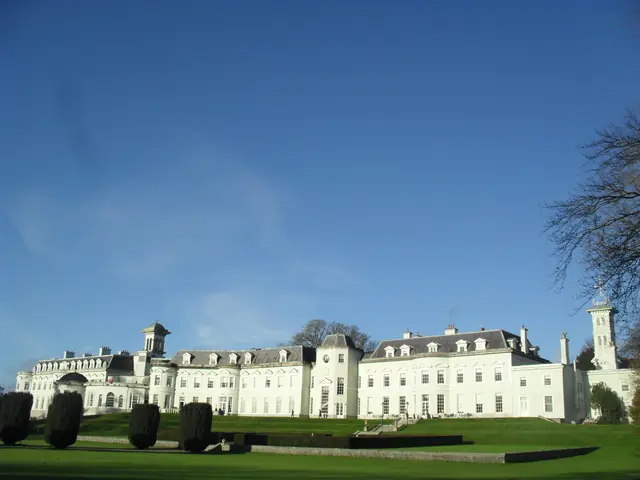
The match was played on 22–24 September 2006 at The K Club in Straffan. The course used for the Ryder Cup is now known as Palmer North, an Arnold Palmer design. It should not be confused with Palmer South, the resort's other course, or with Adare Manor, Ireland's future Ryder Cup host in 2027. A return to the same country is not a return to the same venue.
The K Club had already established a place in European professional golf through tournament staging before the Ryder Cup arrived. Its international team match brought a much wider spotlight, but did not create its golfing identity from nothing. For visitors, that longer tournament story is worth exploring alongside the famous September weekend. The current course guide explains the practical setting; the historical record identifies which competition took place on which ground.
Ireland's role also had meaning beyond geography. Irish players had contributed to the Ryder Cup long before the country hosted. Bringing the event to County Kildare allowed that contribution to be celebrated in front of a home audience, while the team still represented Europe as a whole.
Woosnam's team and the captain's selections
Ian Woosnam captained Europe against Tom Lehman's United States. Clarke and Lee Westwood were Woosnam's two selections, and their contribution became an important part of the result. Westwood finished unbeaten across five matches, collecting four points; Clarke played three and won three. Their effectiveness provides evidence for the selection decisions without suggesting that a captain could know the outcome in advance.
The choice of Clarke had an unavoidable personal context. Heather had died in August, only weeks before the match. The organiser's retrospective describes his decision to make himself available and Woosnam's subsequent selection. Those public facts are enough to explain the circumstances. A history should not claim that golf resolved grief, nor should it imply that another decision would have been a failure of courage.
Westwood's partnership offered a sporting as well as a personal connection. The pair had Ryder Cup experience together and won both four-ball matches at The K Club. Team golf made room for two players to combine their skills, communicate between shots and share the demands of the occasion. The resulting points can be measured; the support around them should be described with care.
Friday and Saturday: a lead built session by session
Europe won each of the four team sessions 2½–1½. That produced a 5–3 lead after Friday and a 10–6 advantage after Saturday. The repetition of the session scores can make the progress look mechanical in retrospect, but each depended on individual matches with their own turns. The final team margin was not established on the opening morning.
Clarke and Westwood beat Phil Mickelson and Chris DiMarco one up in Friday's four-balls. On Saturday morning they defeated Tiger Woods and Jim Furyk 3&2. Two different American pairings therefore supplied the opposition in Clarke's team matches, while his singles would ask him to play without a partner. The sequence is useful because it identifies the actual golf behind the general description of an inspiring appearance.
Elsewhere, Sergio García and Luke Donald were successful together in foursomes, and García and José María Olazábal supplied four-ball points. Europe had several productive combinations rather than one partnership carrying the whole side. The 10–6 lead gave the hosts room before the singles, but twelve points still remained available and the Americans had not been mathematically eliminated.
Clarke's singles and Stenson's winning point
Clarke beat Zach Johnson 3&2 in the singles, completing his perfect three-match return. The public scenes after that match, including support from the American side, became a defining part of the week. They should not be confused with the separate match that supplied the team's winning point.
That distinction belongs to Henrik Stenson. The Swedish rookie beat Vaughn Taylor 4&3, securing outright victory for Europe. A Ryder Cup result can move through several thresholds: a holder can first become certain to retain, then become certain to win outright, while other matches continue to determine the final total. Headlines often compress those moments into one celebration. The complete account should retain the difference without making the arithmetic more elaborate than necessary.
Europe went on to take the singles 8½–3½ and the full match 18½–9½. The nine-point margin equalled its previous record from 2004. Stenson's decisive contribution, Clarke's three wins and the eventual score are all important, but they describe different aspects of the same afternoon. Recognising each prevents one famous image from displacing another player's actual part in the result.
Two aces and a broader team performance
The week also contained two holes-in-one at the fourteenth. Paul Casey made one in Saturday's foursomes; Scott Verplank made the other in Sunday's singles against Pádraig Harrington. Verplank's was the first American ace in Ryder Cup history. These moments provide another route into the tournament beyond the final margin and the emotional focus on Clarke.
A hole-in-one remains one hole within a match-play contest. It can change the position of that match without determining the entire team competition. That distinction makes the Ryder Cup different from an individual stroke-play event, where the same shot directly reduces a player's aggregate score. The spectacular event and its competitive effect need to be explained together.
Europe's strength across the sessions was unusually comprehensive. The side won all five sessions, including the singles. The record should be described within the twenty-eight-point format rather than as an unqualified claim about every programme used since 1927. Earlier Ryder Cups offered different opportunities, so meaningful comparisons need a stated frame.
Remembering the match without simplifying it
The K Club remains a significant stop for anyone following Ireland's golf history. Its Ryder Cup links a first national staging, a strong European team performance and a deeply personal story that was visible to the public without belonging to the public. Those layers can be acknowledged together. Respectful writing does not need imagined conversations, a moral attached to every putt or an assertion that a sporting result settled a private loss.
For a present-day visit, begin with the Palmer North venue information, then read the combined course history connecting The K Club with Adare Manor. The 2027 event hub explains the new match in County Limerick, while the Kildare accommodation guide supports a separate visit to the 2006 host. A wider Irish itinerary can include both, provided the travel plan recognises the distance and the different access arrangements.
The most useful preparation is to identify what interests you: the closing holes, the partnership record, the Irish hosting milestone or the way the team supported Clarke. That gives the visit a focus beyond collecting a photograph of a famous resort. The history stays attached to its actual course, players and results, and the practical guides help turn that understanding into a workable trip.
Sources and useful official links
- Confirmed: The K Club's tournament history
- Confirmed: Palmer North course information
- Confirmed: official 2006 statistical report
- Confirmed: official account of the captain's picks
- Confirmed: organiser's ten-year retrospective
- Reported: Golf Monthly's independently reported inside story
- Confirmed: independent detailed 2006 results
- Confirmed: Clarke's three-match retrospective
- Confirmed: official Stenson profile
- Confirmed: official photo captions identifying the winning putt
- Reported: contemporary Irish Times report
- Confirmed: official history of Ryder Cup aces
Useful reading for your visit
Visit today
Some links earn us a small commission at no extra cost to you. Affiliate disclosure.