Use the glossary beside the ropes
Golf language becomes easier when you connect a word with something happening in front of you. Start with par, birdie, bogey and the leaderboard, then use the jump links when a commentator or nearby spectator mentions an unfamiliar term. The definitions below are for following the game; officials apply the full rules in competition.
For a longer explanation, read scoring for spectators and how to behave around play. You can put the vocabulary into a real trip through The Open or Ryder Cup 2027. Our first-visit guide covers the practical day, from arrival to a manageable route home.
A–Z jump links
Letter A
- Ace
- A hole completed in one stroke; the term describes the strokes taken, regardless of the hole’s par.
- Address
- The position a player takes while preparing to make a stroke; spectators should already be still and quiet.
- Aggregate
- A combined score across specified holes or rounds; an aggregate play-off is different from immediate sudden death.
- Albatross
- A score three strokes below par on a hole, rare enough to produce a particularly memorable cheer.
- All square
- A match-play contest that is level, with neither side leading by a hole at that point.
- Approach
- A shot intended to reach the green or its immediate surrounds after the earlier part of the hole.
Letter B
- Back nine
- Holes ten to eighteen of a course; a group starting elsewhere may reach them earlier in its round.
- Ball marker
- A small object used to mark a ball’s position before it is lifted under the rules.
- Ballot
- An application process used to allocate ticket opportunities when demand exceeds supply; applying does not itself secure admission.
- Birdie
- A score one stroke below par; watch the player’s total as well as celebrating the individual hole.
- Bogey
- A score one stroke above par, which can still be a good recovery after a difficult position.
- Break
- The sideways curve a putt follows because of the putting surface’s slope and the ball’s speed.
- Bunker
- A specially prepared area of sand; its shape can make escaping more important than advancing towards the hole.
Letter C
- Caddie
- The person assisting a player with equipment and advice, often discussing distance, wind and target before a shot.
- Carry
- The distance a ball travels through the air before landing, distinct from the extra distance it then rolls.
- Chip
- A short shot near a green, generally intended to travel relatively low before rolling towards the target.
- Clubhouse
- The course’s main building; spectator admission does not automatically include access to every clubhouse room or facility.
- Concession
- An opponent’s acceptance of a stroke, hole or match in match play; spectators cannot make that decision.
- Cut
- A competition’s reduction of the field under its published conditions, often affecting who plays the later rounds.
Letter D
- Divot
- A piece of turf displaced by a stroke; do not cross the ropes to replace one for a player.
- Dogleg
- A hole whose fairway changes direction, sometimes hiding the ideal landing area from your first viewing position.
- Dormie
- A traditional match-play description for a lead equal to the holes remaining; modern scoreboards may use other wording.
- Double bogey
- A score two strokes above par on the hole; it adds two to the running score against par.
- Draw
- A shot curving right to left for a right-handed golfer; the corresponding shape reverses for a left-hander.
- Driver
- The club commonly used for long tee shots, although a player may choose a shorter club for control.
- Drop
- A rules procedure for putting a ball into play; the permitted location and method depend on the situation.
Letter E
- Eagle
- A score two strokes below par on one hole, such as three strokes on a par-five.
- Even par
- A total exactly equal to the relevant par, often displayed as E on a live leaderboard.
- Exemption
- A qualifying category giving a player entry without using a particular qualifying competition; the event publishes its own categories.
Letter F
- Fade
- A controlled left-to-right curve for a right-handed player; do not confuse a chosen shape with an accidental miss.
- Fairway
- The closely maintained main playing route between tee and green, although not every hole needs a long fairway.
- Flagstick
- The movable pole placed in the hole to show its position; its movement also helps spectators notice wind.
- Fore
- An urgent warning of a ball that may endanger someone; protect yourself and follow officials’ instructions immediately.
- Four-ball
- Partners each play their own ball, with the lower score counting for their side on each hole.
- Foursomes
- Partners play one ball in alternate strokes and alternate teeing off on successive holes under the format’s rules.
- Fringe
- The closely cut area immediately outside a putting green, where a player may still choose to use a putter.
Letter G
- Gallery
- The spectators gathered around the course; being part of a moving gallery requires care near ropes and crossings.
- Grandstand
- A raised spectator seating structure, with access and seat allocation governed by the particular event’s admission arrangements.
- Green
- The specially prepared putting area containing the hole, often with slopes that are hard to appreciate on television.
- Green in regulation
- A statistical description of reaching the green with at least two strokes remaining relative to the hole’s par.
Letter H
- Halved
- Shared equally: a tied hole or match has traditionally been described as halved in match-play conversation.
- Handicap
- A measure used to support equitable competition between golfers of different abilities; elite professional events generally use scratch scoring.
- Hole out
- Finish the hole by putting the ball in the cup, subject to the rules applying to the format.
- Hook
- A pronounced right-to-left curve for a right-handed golfer, often less controlled than an intentional draw.
Letter I
- Iron
- A club category offering different lofts and distances; the number alone does not tell a spectator the intended shot.
- Inside the ropes
- The controlled playing area; a general spectator ticket does not permit you to enter it without official direction.
Letter J
- Junior ticket
- A youth admission category with an event-specific age rule; read the terms rather than assuming a universal threshold.
Letter K
- Knockdown
- A lower-flight shot intended to control trajectory, useful to recognise when wind influences a player’s choice of club.
Letter L
- Lay-up
- A deliberate shot short of a hazard or target, usually to create a more manageable next stroke.
- Leaderboard
- The display of current standings, which needs to be read alongside each player’s progress through the round.
- Lie
- The way a ball rests on the ground; grass, slope and surface can change the available shot.
- Links
- A course associated with sandy coastal ground, where contours, wind and running shots commonly influence the game.
- Local Rule
- A rule adopted by the committee for the competition or course; spectators should leave its application to officials.
Letter M
- Major
- One of golf’s recognised leading individual championships; the current men’s and women’s lists contain different numbers of events.
- Marshal
- An official or volunteer helping manage spectators and play; follow their directions even when a shortcut looks empty.
- Match play
- Competition decided hole by hole between opposing sides, rather than by comparing every stroke across the whole field.
- Medal play
- An older description commonly used for stroke play, where the total score determines the result under the conditions.
Letter N
- Nearest point of complete relief
- The reference point used in specified relief procedures; it does not simply mean the most attractive nearby place to play.
- No return
- A scoring description associated with a round without a completed valid return; check the official result for its exact context.
Letter O
- Out of bounds
- Ground outside the course boundary as defined by the committee; the rules specify the consequences for a ball there.
- Over par
- A score higher than the relevant par, normally shown with a plus sign in tournament scoring.
Letter P
- Par
- The reference score assigned to a hole, used to describe scores as above, below or level.
- Penalty area
- An area defined by the committee where particular relief options apply, commonly identified with red or yellow markings.
- Pin
- Informal language for the flagstick or hole location, as in a difficult pin near an edge of the green.
- Pitch
- A shorter lofted shot intended to spend more of its journey in the air than a typical chip.
- Play-off
- Additional play used to settle a tie under the event’s published conditions, which determine its holes and format.
- Pot bunker
- A relatively small, deep bunker with steep faces, capable of forcing a player to escape sideways or backwards.
- Pro-am
- An event or round pairing professionals with amateurs, with its own schedule and admission conditions.
- Putt
- A stroke commonly made with a putter, usually on or near the putting green towards the hole.
Letter Q
- Qualifier
- A player or competition associated with earning an entry place; the championship publishes which qualifying routes are available.
Letter R
- Rake
- Equipment used to smooth bunker sand; visitors should never enter the playing area to tidy a bunker themselves.
- Read
- Judge the line and pace of a putt by considering slopes, distance and the surface’s behaviour.
- Relief
- A rules procedure allowing or requiring a player to move from a particular situation, sometimes with a penalty.
- Rough
- Longer grass outside the main closely cut areas, affecting contact, control and the chance of finding the ball.
- Round
- The scheduled sequence of holes a player completes, which may be one part of a multi-day tournament.
Letter S
- Scratch
- Playing without applying a handicap allowance; professional championship scores are normally understood on this basis.
- Shank
- A mis-hit where the ball strikes near the club’s hosel and departs sharply from the intended direction.
- Shotgun start
- A format where groups begin from different holes, relevant only when the event’s programme actually specifies it.
- Singles
- A match-play contest between one player on each side, familiar from the final day of the Ryder Cup.
- Slice
- A pronounced left-to-right curve for a right-handed golfer, generally distinguished from a controlled fade.
- Stableford
- A scoring format awarding points for hole scores; do not assume a professional stroke-play leaderboard uses it.
- Stroke play
- A competition where strokes and applicable penalties are counted towards the score, rather than winning holes individually.
- Sudden death
- A play-off approach where the first decisive result settles the contest, subject to that competition’s published conditions.
Letter T
- Tee time
- A scheduled starting time for a player or group; practice movements may follow a different arrangement.
- Teeing area
- The defined starting area for a hole; spectators watch from outside the permitted playing boundary.
- Thru
- A scoreboard abbreviation indicating progress through a round; consult the display’s key when groups start from different tees.
- Tied
- Sharing a position or score; a T beside a leaderboard number means players currently occupy that place together.
- Triple bogey
- A hole score three strokes above par, adding three to the player’s total against that reference score.
Letter U
- Unplayable ball
- A situation where a player may take specified relief under the rules, with penalty consequences and restrictions.
- Up
- Ahead by a stated number of holes in match play, as distinct from strokes ahead in stroke play.
Letter V
- Vardon grip
- A club-holding style with overlapping fingers, named in golf tradition; spectators need not identify grips to appreciate a shot.
Letter W
- Wedge
- A lofted club used for shorter shots and particular recovery tasks, with different wedges offering different flight options.
- Winter rules
- Informal language often associated with preferred lies; only the committee’s actual Local Rule determines what is allowed.
- Withdrawal
- A player leaving the competition, commonly marked WD; use the official result rather than guessing the reason.
Letter X
- X on a scorecard
- An indication sometimes used when no hole score is returned; its significance depends on the competition and scoring format.
Letter Y
- Yardage book
- A reference showing course distances and features, used by players and caddies when planning shots and targets.
Letter Z
- Zone
- A defined area such as a dropping zone or spectator zone; its meaning comes from the relevant signs or rules.
Old Course names and what to watch
- Burn; 1st hole
- Burn is the name of the opening hole and the Scots word for a stream. The R&A identifies the first hole as Burn. Use the name to orient yourself at the beginning of a round, while following the event route rather than crossing the playing area.
- Ginger Beer; 4th hole
- The R&A names the fourth Ginger Beer. Its guide describes the choice between a riskier right-hand line and a safer left-hand route. For spectators, the interest is how the chosen position changes the next shot, not simply how far the drive travels.
- High (In); 11th hole
- This is the name used for the par-three eleventh in The R&A guide. The word In distinguishes it in the return half of the round. Watch the effect of wind and the player’s intended landing point rather than judging the hole only by its short length.
- Hill and Strath bunkers
- The organiser identifies these hazards short of the eleventh green. A bunker is a specially prepared sand area; a named bunker gives commentators a precise reference. From a permitted position, notice how players choose an approach that avoids leaving a difficult recovery between the sand and the flag.
- Long; 14th hole
- Long is the name of the fourteenth. It is a par five, and The R&A describes the Beardies as a group of bunkers affecting the drive. Listen for discussion of the chosen line and the next lay-up rather than assuming a long hole is only about power.
- Hell Bunker
- St Andrews Links identifies Hell Bunker among the Old Course’s landmark features. Treat the name as a way to recognise the famous sand hazard, not as an invitation to leave spectator paths to inspect it. A clear view of a recovery depends on the actual event layout.
- The Beardies
- The R&A uses this collective name for the bunkers affecting the tee shot on the fourteenth. A collective hazard name can refer to several features rather than a single pot of sand. Watch how the player’s route avoids one problem while creating a different angle for the next stroke.
- Road; 17th hole
- Road is the name of the seventeenth, widely called the Road Hole. The R&A highlights the Road Hole Bunker, the road and the stone wall around the green. These are distinct features, so listen for which one is involved before looking for the ball.
- Road Hole Bunker
- The famous bunker beside the seventeenth green is separate from the road behind. A short approach can create a very different problem from a ball going long. Spectators should remain behind the ropes and give players and officials the space needed for a recovery or ruling.
- Tom Morris; 18th hole
- The final hole’s name in The R&A guide is Tom Morris. It returns towards town and shares the broad area of fairway with the opening hole. When following commentary, distinguish the hole being played from the direction in which another group is moving.
- Swilcan Bridge
- The small stone bridge is an Old Course landmark associated with the final hole and famous player farewells. It is part of a working championship course during the event. Plan a visitor photograph only when public access is permitted, never by stepping into a controlled playing area.
- Valley of Sin
- This is the hollow short of the final putting surface. The R&A recalls Costantino Rocca’s long putt from there in 1995. Watch whether an approach reaches the green or rolls back into the hollow; the last few yards can change the difficulty of the next stroke.
- Double green
- A double green serves two holes, with different holes and flags on one large putting surface. The R&A notes that the seventh and eleventh share a green. Identify the flag being used by the group you are watching before trying to interpret the line of the approach.
- Out and in
- These terms describe the outward and return halves of a round. They help explain hole names and the direction players travel. They do not imply that a spectator can freely walk between every neighbouring hole; use the championship map and designated crossings to plan your movement.
- Links
- Links describes the coastal golfing landscape associated with the Old Course. For a visitor, exposed conditions and the way the ball travels along the ground are part of its interest. Bring layers and look at the contours as well as the flag when judging a shot.
- Ropes and crossings
- Ropes separate the spectator space from play; controlled crossings allow movement where marshals permit. A gap on a map is not permission to cross a fairway. Wait for a clear instruction, then move promptly with the group so play can continue safely.
Use the names without losing your way
Keep the championship map as the practical guide to movement. Course names describe golf features, while spectator routes describe where you can go. The two do not always line up conveniently, especially where a large green serves different holes or where controlled crossings interrupt a direct-looking route. Decide your next position before the group you are following moves away.
For a first visit, pick a few landmarks to recognise and enjoy the rest of the day without trying to master every name. The hole-by-hole viewing guide adds context, while the Open hub brings together admission and transport. Stay in St Andrews or a suitable nearby base if you want time to explore the town around your ticketed day. Outside championship access controls, a future permitted visit can offer a different perspective on the same features.
Find accommodation for your visit
Some links earn us a small commission at no extra cost to you. Affiliate disclosure.
Sources and useful official links
Useful reading for your visit
You might also like


The Open 2027 St Andrews: Tickets & Hotels
Plan your St Andrews visit with ticket advice, travel options and places to stay.
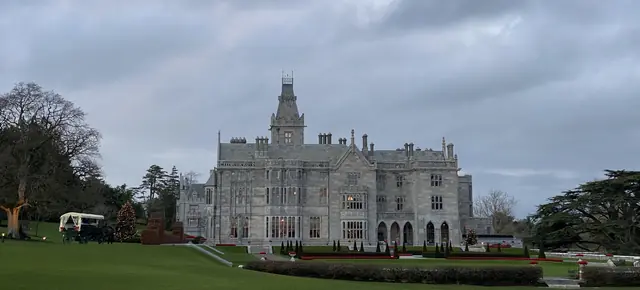

Ryder Cup 2027: Tickets, Dates & Hotels
Compare places to stay and prepare for team golf at Adare Manor.

First Time at a Golf Tournament: A Visitor Guide
For your first golf tournament, choose a day that suits your interests, book admission through the organiser and plan a manageable route with breaks. Comfortable shoes, weather protection and a reliable return journey matter more than knowing every golf rule.